
There’s something wonderfully comforting about a pot of Slow Cooker White Wine Chicken Stew bubbling away while the kitchen slowly fills with the smell of garlic, herbs, and tender chicken. This is the kind of dinner that feels special enough for a Sunday meal but is easy enough to make on a busy weeknight.
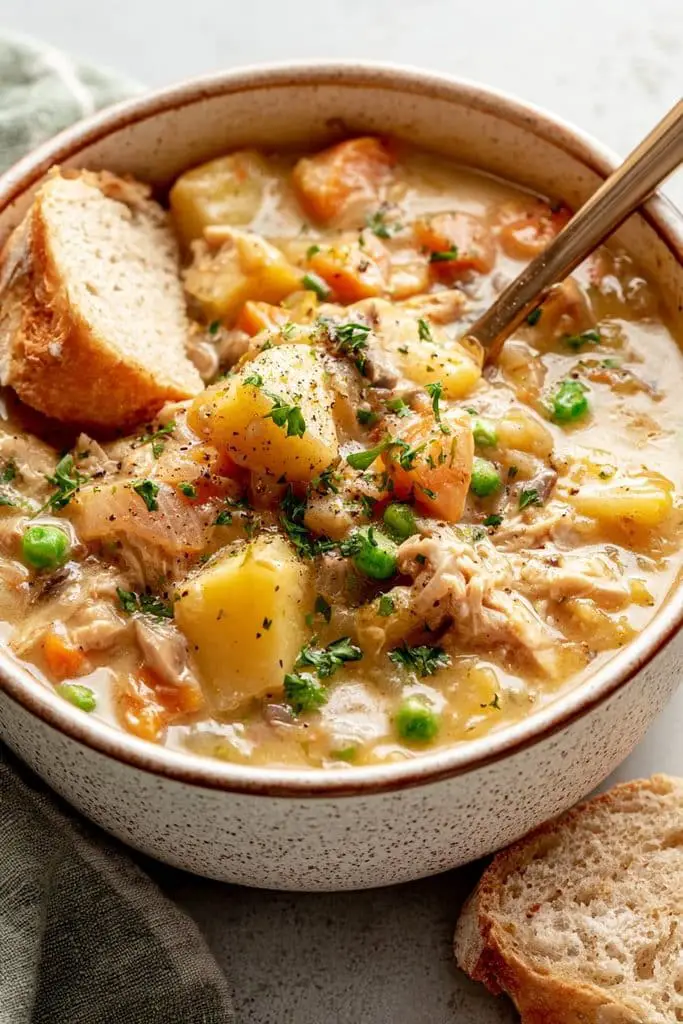
The chicken cooks gently in a savory white wine broth with vegetables and herbs until everything is tender and flavorful. The result is a cozy bowl of creamy, hearty goodness that tastes like you spent much longer in the kitchen than you actually did.
Ingredient Notes & Substitutions
CHICKEN THIGHS are my first choice here because they stay wonderfully tender during slow cooking and have more flavor than leaner cuts. You’ll need about 2 pounds of boneless, skinless chicken thighs; look for pieces that are plump, evenly sized, and fresh. Boneless chicken breasts can work too, but keep an eye on them because they can dry out if overcooked.
YELLOW ONION gives the stew a sweet, savory base. One large onion, finely chopped, is plenty. Choose one that feels firm and heavy for its size, with dry outer skin. A couple of shallots can be used instead if you prefer a slightly sweeter flavor.
CARROTS bring gentle sweetness and color to the stew. Use about 3 medium carrots, peeled and cut into chunky pieces. Fresh carrots should be firm and bright rather than soft or rubbery. Baby carrots work in a pinch, although they’re not quite as flavorful.
CELERY adds that classic savory depth you expect in a good chicken stew. About 2 large stalks, sliced, will do the job. If you’re out of celery, you can leave it out or add a little extra carrot.
GARLIC is essential for bringing the flavors together. Four fresh cloves, minced, give the stew plenty of flavor without overpowering the wine and herbs. Use fresh garlic whenever possible; jarred minced garlic can be substituted if that’s what you have.
DRY WHITE WINE gives the broth its distinctive flavor and a subtle acidity that keeps the stew from tasting heavy. About 1 cup is enough. Choose a dry wine such as Sauvignon Blanc, Pinot Grigio, or an unoaked Chardonnay. If you don’t cook with wine, use extra chicken broth with a tablespoon of lemon juice added near the end.
CHICKEN BROTH forms the main body of the cooking liquid. You’ll need about 2 cups of low-sodium chicken broth so you have more control over the final seasoning. Homemade broth is lovely, but a good-quality store-bought version works perfectly well.
POTATOES make this a proper one-pot meal. Around 1½ pounds of baby potatoes, halved or quartered depending on their size, work beautifully. Yukon Gold potatoes are especially good because they become tender without falling apart too quickly. Waxy potatoes are another reliable choice.
HEAVY CREAM gives the finished stew a smooth, creamy texture. About ½ cup is enough to enrich the broth without turning it into a thick cream sauce. For a lighter version, use half-and-half or evaporated milk.
FLOUR helps the broth develop a little body. Two tablespoons of all-purpose flour are enough. If you need a gluten-free version, use a gluten-free all-purpose flour blend or thicken the finished stew with a small cornstarch slurry.
FRESH THYME adds a gentle herbal note that pairs beautifully with chicken and white wine. A few fresh sprigs are ideal, but about 1 teaspoon of dried thyme can be used instead.
PARSLEY is the fresh finishing touch that wakes everything up. A small handful of chopped fresh parsley is all you need. Add it right before serving for the best color and flavor.
BUTTER AND OLIVE OIL are used for browning the chicken and vegetables. A tablespoon of each gives you enough fat to build flavor without making the stew greasy. If you prefer, use all olive oil.
SALT AND BLACK PEPPER should be added gradually. Since chicken broth varies in saltiness, taste the stew near the end and adjust it to your liking.
Step-by-Step Instructions
1. Season the chicken
Pat about 2 pounds of boneless, skinless chicken thighs dry with paper towels. Season both sides generously with salt and freshly ground black pepper.
Drying the chicken first is a small step, but it helps it brown instead of simply steaming in the pan.
2. Brown the chicken
Heat 1 tablespoon of olive oil and 1 tablespoon of butter in a large skillet over medium-high heat. Once the butter is melted and the pan is hot, add the chicken in a single layer.
Cook for about 3–4 minutes per side, just until the outside is deeply golden. The chicken doesn’t need to be cooked through at this point.
Transfer it to your slow cooker. Don’t worry if there are browned bits left in the skillet—that’s exactly where a lot of the flavor is hiding.
3. Sauté the vegetables
Reduce the heat to medium and add the chopped onion and celery to the same skillet. Cook for about 3 minutes, stirring occasionally, then add the carrots and minced garlic.
Cook for another minute or two, just until the garlic smells fragrant and the vegetables begin to soften. You should have a lovely savory aroma at this point.
4. Add the flour
Sprinkle 2 tablespoons of all-purpose flour over the vegetables. Stir continuously for about 1 minute so the flour coats everything evenly.
This quick cooking step removes the raw flour taste and will help give the finished stew a pleasantly silky broth.
5. Deglaze with white wine
Slowly pour 1 cup of dry white wine into the skillet while scraping the bottom with a wooden spoon.
Let it simmer for about 2–3 minutes. Those browned bits will loosen from the bottom of the pan and dissolve into the wine, creating a much deeper flavor for your slow cooker chicken in white wine.
6. Transfer everything to the slow cooker
Pour the wine and vegetable mixture over the chicken. Add about 2 cups of chicken broth, 1½ pounds of prepared baby potatoes, and several sprigs of fresh thyme.
Give everything a gentle stir. The liquid doesn’t need to completely cover the chicken and vegetables; the slow cooker will create additional moisture as everything cooks.
7. Slow cook until tender
Cover and cook on LOW for 6–7 hours or HIGH for 3–4 hours.
The chicken should be very tender and easy to pull apart with a fork, while the potatoes and carrots should be soft but not completely falling apart.
Try not to lift the lid repeatedly while cooking. Each time you open it, heat escapes and the cooking time can increase.
8. Make it creamy
About 20–30 minutes before serving, remove the chicken thighs and discard the thyme stems.
Stir ½ cup of heavy cream into the stew. If the chicken thighs are large, you can shred or roughly chop them before returning them to the slow cooker.
Give everything a gentle stir and let it cook on HIGH for another 15–20 minutes, or until the broth is hot and lightly creamy.
9. Taste and finish
Taste the stew and add more salt and black pepper if needed. If the flavor seems a little flat, a small squeeze of fresh lemon juice can brighten it beautifully.
Finish with a generous handful of chopped fresh parsley. The contrast of fresh herbs against the rich, creamy broth makes the whole dish taste fresher.
10. Serve warm
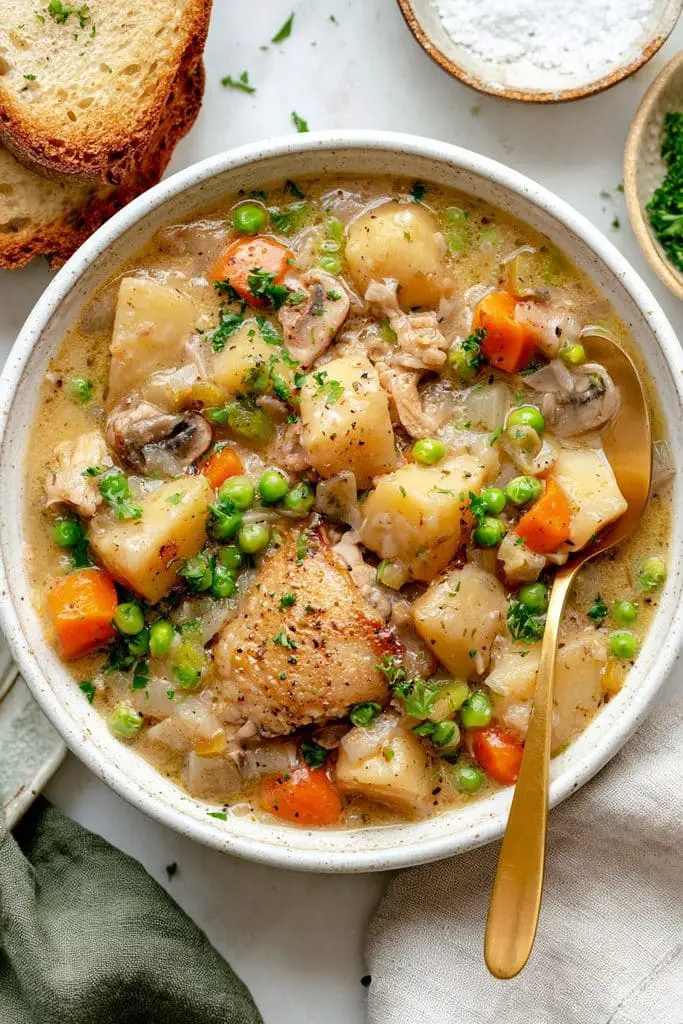
Ladle the stew into bowls while it’s piping hot. Make sure everyone gets plenty of tender chicken, potatoes, vegetables, and that creamy white wine broth.
A piece of crusty bread on the side is highly recommended, it’s practically made for soaking up every last drop.
Expert Tips
- Choose similar-sized chicken thighs so they cook at roughly the same rate and stay evenly tender.
- Don’t skip browning the chicken. That golden crust adds much more flavor to the finished stew.
- Use a dry white wine, not a sweet wine, so the broth stays savory and balanced.
- Keep the potato pieces fairly large so they don’t disappear into the stew during the long cooking time.
- Add the cream near the end rather than at the beginning for a smoother, fresher-tasting finish.
- Taste before adding lots of salt. Chicken broth and wine can vary considerably in saltiness and intensity.
- Finish with fresh parsley and a little lemon juice if the stew tastes rich but needs a brighter final note.
Storage & Make-Ahead
Let leftover stew cool slightly, then transfer it to an airtight container and refrigerate it within a reasonable amount of time. It will keep well in the refrigerator for about 3–4 days.
For longer storage, freeze the stew in airtight freezer-safe containers for up to 2–3 months. The potatoes may soften slightly after freezing and thawing, but the stew will still be delicious.
Reheat gently in a saucepan over medium-low heat, stirring occasionally. If the broth has thickened too much in the refrigerator, add a small splash of chicken broth or water while reheating.
You can also reheat individual portions in the microwave, but use shorter intervals and stir between each one. Avoid boiling the stew aggressively, especially after adding the cream, because gentle reheating gives you a much better texture.
The vegetables can be chopped and the chicken seasoned a day ahead. For an especially easy dinner, prepare those ingredients the night before and refrigerate them separately until you’re ready to start cooking.
What to Serve With
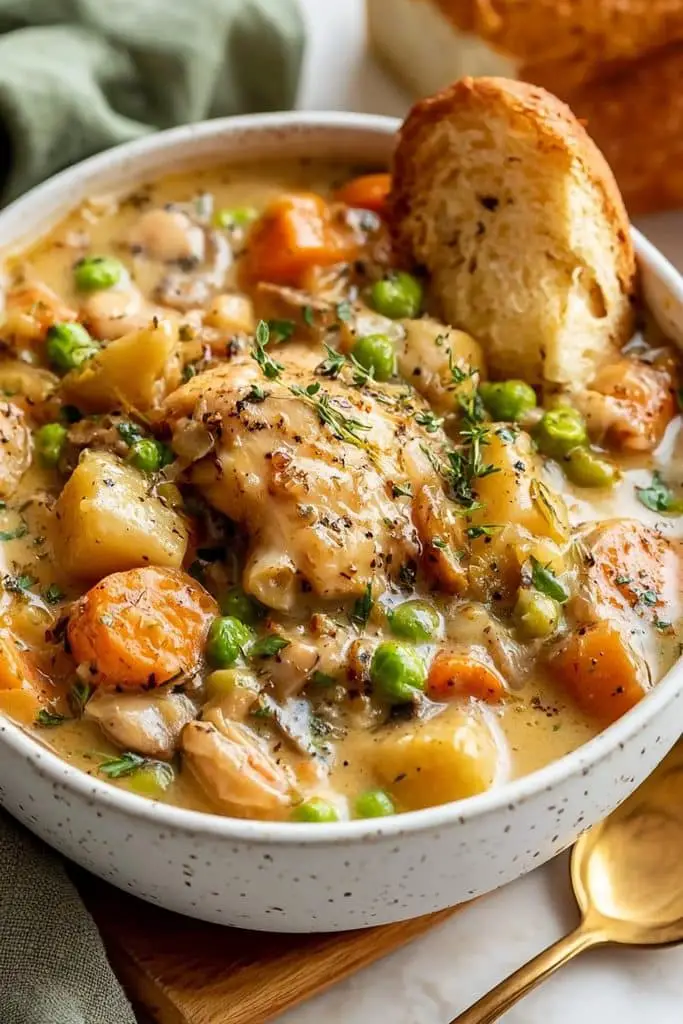
This stew is hearty enough to serve as a complete meal, especially with some crusty French bread or a warm baguette for dipping into the creamy broth.
For a lighter dinner, pair it with a simple green salad dressed with lemon vinaigrette. Steamed green beans, roasted asparagus, or a small serving of sautéed spinach would also work beautifully.
This creamy white wine chicken slow cooker recipe is especially handy for busy weeknights because most of the cooking happens while you’re doing something else. It also feels right at home on a relaxed family dinner table or a casual holiday gathering when you want something comforting without spending all evening at the stove.
FAQs
Can I make this slow cooker white wine chicken stew without alcohol?
Absolutely. Replace the white wine with an additional 1 cup of low-sodium chicken broth and add about 1 tablespoon of fresh lemon juice near the end. You’ll still get a flavorful, comforting stew.
Can I use chicken breasts instead of thighs?
Yes. Boneless, skinless chicken breasts can be used, although tender chicken thighs are more forgiving in the slow cooker. Check the chicken toward the lower end of the cooking time so the breasts don’t become dry.
Can I make this chicken stew on the stovetop?
Yes. After browning the chicken and preparing the vegetables, simmer everything gently in a large Dutch oven over low heat for about 35–45 minutes, or until the chicken and potatoes are tender. Stir in the cream during the final few minutes.
Why did my stew turn out thinner than expected?
Slow cookers can vary in how much moisture they retain. If the broth is too thin, leave the lid slightly ajar and cook on HIGH for a little while, or stir in a small cornstarch slurry and allow it to heat until thickened.
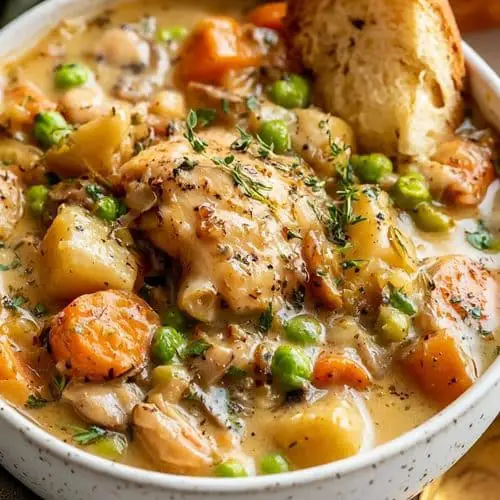
Slow Cooker White Wine Chicken Stew
Ingredients
- 2 lb boneless skinless chicken thighs
- 1 tbsp olive oil
- 1 tbsp unsalted butter
- 1 large yellow onion chopped
- 3 medium carrots peeled and chopped
- 2 celery stalks sliced
- 4 garlic cloves minced
- 2 tbsp all-purpose flour
- 1 cup dry white wine
- 2 cups low-sodium chicken broth
- 1½ lb baby Yukon Gold potatoes halved
- 4 –5 fresh thyme sprigs
- ½ cup heavy cream
- ½ cup fresh parsley chopped
- 1 tsp salt plus more to taste
- ½ tsp black pepper plus more to taste
- 1 tbsp fresh lemon juice optional
Instructions
- Brown the chicken: Season the chicken with salt and pepper. Heat olive oil and butter in a skillet over medium-high heat, then brown the chicken for 3–4 minutes per side. Transfer to the slow cooker.
- Cook the vegetables: Add onion, celery, and carrots to the skillet. Cook for 3–4 minutes, then stir in garlic and cook for 1 minute.
- Build the sauce: Sprinkle in the flour and cook for 1 minute. Slowly add the white wine, scraping up the browned bits. Simmer for 2–3 minutes.
- Slow cook: Transfer the vegetable and wine mixture to the slow cooker. Add chicken broth, potatoes, and thyme. Cover and cook on LOW for 6–7 hours or HIGH for 3–4 hours.
- Add cream: Remove the thyme and chicken. Stir in the heavy cream, then return the chicken to the slow cooker. Cook on HIGH for another 15–20 minutes.
- Finish and serve: Taste and adjust the seasoning. Add lemon juice if desired, sprinkle with fresh parsley, and serve hot with crusty bread.