
This one-pot lemon asparagus pasta with shrimp is the kind of dinner that feels effortless but tastes like something special. It comes together in just 30 minutes, making it perfect for busy moms or working professionals who want a flavorful meal without a sink full of dirty dishes. With only one pan, you get maximum taste and minimal cleanup.
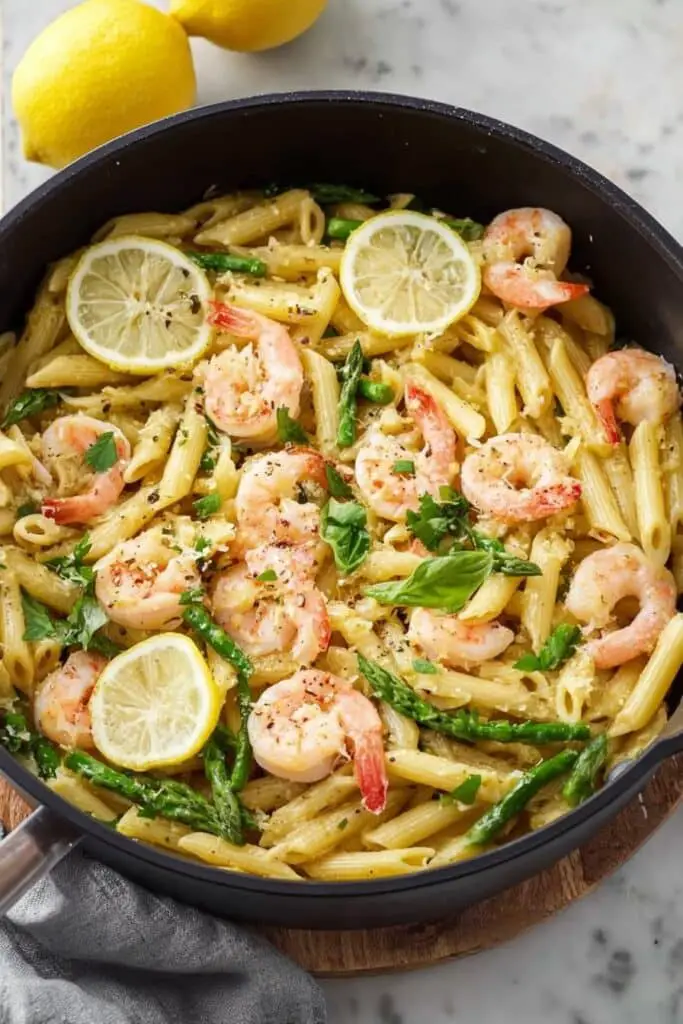
If you’ve ever made shrimp and asparagus penne or a shrimp pasta with white wine sauce, this recipe will feel familiar but much easier. There’s no juggling multiple pots or complicated steps. The pasta cooks right in the sauce, soaking up the bright lemon, garlic, and fresh seasonal flavors. It’s simple, satisfying, and light enough for a spring or summer dinner.
Ingredient Notes & Substitutions
SHRIMP
You’ll need about 1 pound of medium or large shrimp, peeled and deveined. Look for shrimp that smell clean and slightly salty, never fishy. The flesh should feel firm and slightly translucent. Fresh or frozen both work well just thaw frozen shrimp overnight in the fridge or under cold running water. If shrimp isn’t available, you can swap in diced chicken or even sautéed mushrooms for a vegetarian option.
ASPARAGUS
Use one medium bunch of fresh asparagus, trimmed and cut into bite-sized pieces. Choose stalks that are bright green with tightly closed tips. Medium-thickness spears work best—they cook evenly and stay tender without getting mushy. If asparagus isn’t in season, green beans, zucchini slices, or peas make great substitutes.
PASTA
You’ll need about 10–12 ounces of short pasta, like penne, fusilli, or farfalle. This style works perfectly for a one-pot dinner because it cooks evenly and catches the lemon garlic sauce in every bite. Look for pasta with a slightly rough texture—it helps the sauce cling better. Whole wheat or gluten-free pasta can also work, but you may need to adjust the cooking time slightly.
LEMON
Use one large fresh lemon for both zest and juice. Choose a lemon that feels heavy for its size and has a bright, smooth skin. The zest adds fragrance, while the juice gives the dish its fresh, tangy finish. If you’re out of lemons, a small splash of white wine vinegar can provide acidity, though the flavor will be different.
GARLIC
You’ll want 3–4 fresh garlic cloves, finely minced. Look for firm, tight bulbs without soft spots or green shoots. Fresh garlic gives the sauce its warm, savory base. In a pinch, garlic powder can work, but fresh cloves really make the flavor shine.
OLIVE OIL
Use a few tablespoons of good-quality olive oil to sauté the shrimp and garlic. It should smell clean and slightly fruity. Extra-virgin olive oil adds the best flavor, but regular olive oil works just fine for cooking.
PARMESAN CHEESE
About ½ cup of freshly grated Parmesan adds saltiness and richness to the sauce. Look for a firm wedge and grate it yourself if possible it melts smoother than pre-shredded cheese. Pecorino Romano or Grana Padano can be used instead.
WHITE WINE (OPTIONAL)
A small splash of dry white wine adds depth to the sauce, similar to a classic shrimp asparagus pasta with white wine sauce. Choose something crisp like Pinot Grigio or Sauvignon Blanc. If you prefer to skip the wine, just use extra broth.
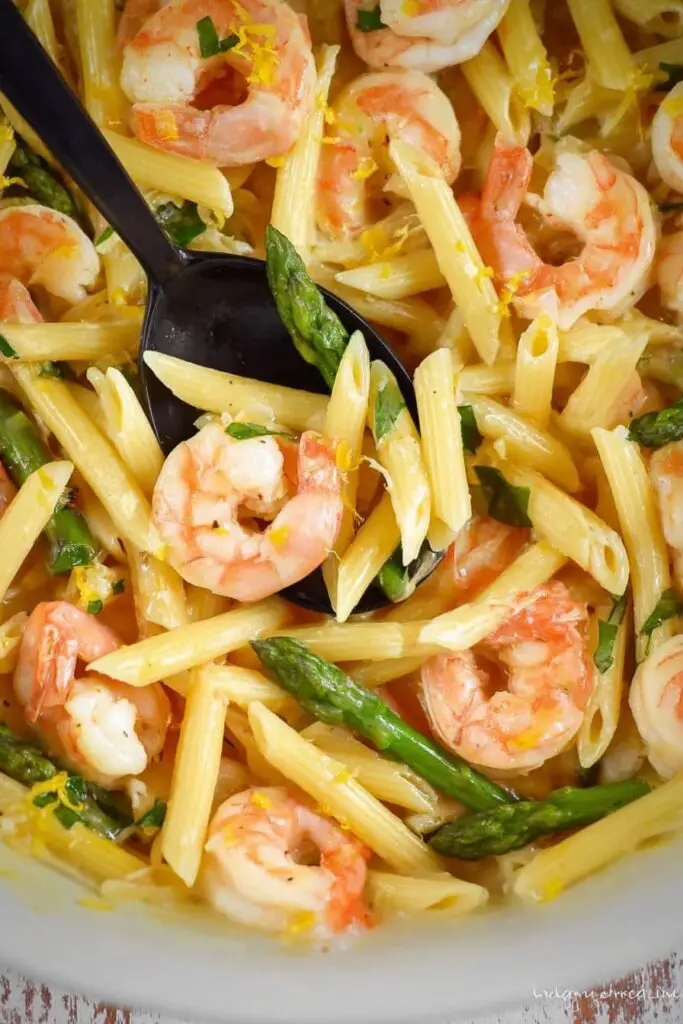
Step-by-Step Instructions
- Heat the pan
Place a large, deep skillet or wide pot over medium heat. Add a drizzle of olive oil and let it warm until it shimmers slightly. - Cook the shrimp
Add the shrimp in a single layer. Let them cook undisturbed for about 1–2 minutes. You’ll see the bottoms turn pink and slightly golden. Flip them gently and cook another minute until just opaque. Remove the shrimp and set them aside on a plate. - Sauté the garlic
In the same pan, add a little more olive oil if needed. Toss in the minced garlic. Stir for about 30 seconds until fragrant. The kitchen should smell warm and savory, not burnt. - Add the pasta and liquids
Pour in the dry pasta. Add water or broth until the pasta is just covered. If using white wine, pour in a small splash now. Stir everything gently so the pasta doesn’t stick. - Simmer the pasta
Bring the mixture to a gentle boil, then reduce the heat to medium-low. Let it simmer uncovered. Stir occasionally, scraping the bottom of the pan so nothing sticks. The liquid will slowly turn cloudy and slightly thick as the pasta releases starch. - Add the asparagus
After about 6–7 minutes, when the pasta is halfway cooked, stir in the asparagus pieces. They’ll turn bright green as they cook, adding color and freshness to the dish. - Finish cooking the pasta
Continue simmering until the pasta is tender and most of the liquid has turned into a light sauce. It should look glossy, not soupy. - Return the shrimp
Add the cooked shrimp back into the pan. Stir gently so they warm through without overcooking. - Add lemon and cheese
Sprinkle in the lemon zest and squeeze in the fresh lemon juice. Stir in the grated Parmesan. The sauce will turn creamy and slightly thicker as the cheese melts. - Taste and adjust
Season with salt and black pepper. If you like a brighter flavor, add another squeeze of lemon. - Serve immediately
Spoon the pasta into bowls while it’s hot. Finish with extra Parmesan and a drizzle of olive oil if you like.
Expert Tips
- Choose medium-thick asparagus for the best balance of tenderness and bite.
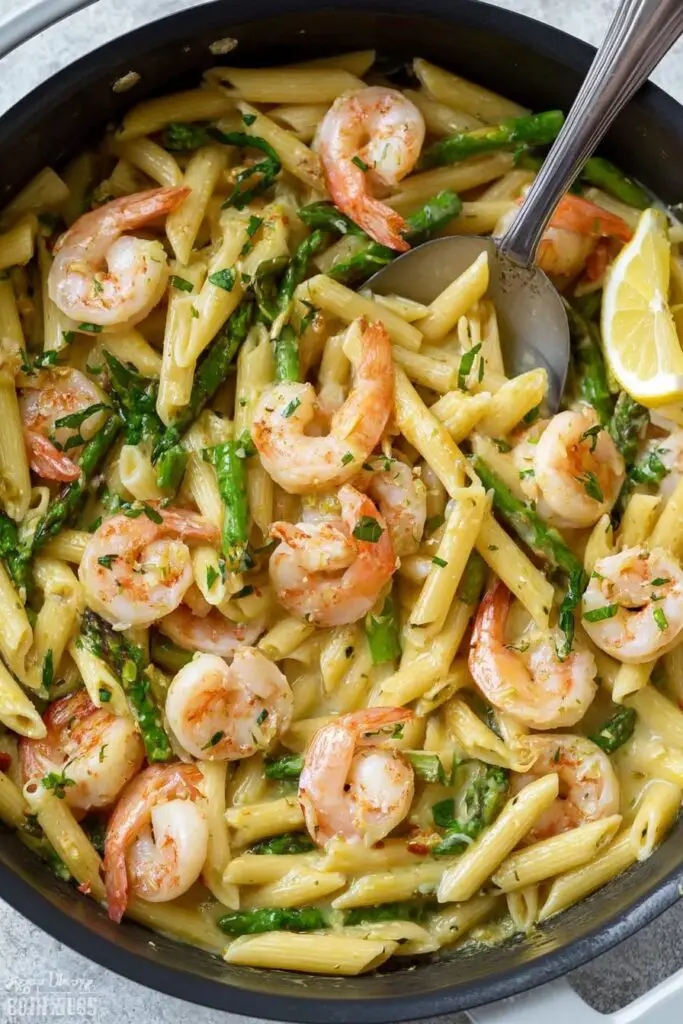
- Don’t overcook the shrimp—they should curl into a loose “C,” not a tight circle.
- Stir the pasta occasionally so the starch creates a silky, natural sauce.
- Add the asparagus halfway through cooking to keep its bright color.
- Fresh lemon zest makes a big difference—don’t skip it.
- Use freshly grated Parmesan for the smoothest, creamiest finish.
- If the sauce gets too thick, add a splash of pasta water to loosen it.
Storage & Make-Ahead
Let the pasta cool completely before transferring it to an airtight container. It will keep well in the refrigerator for up to 2 days. Because shrimp can become rubbery when reheated, warm the pasta gently.
To reheat, place it in a skillet over low heat with a splash of water or broth. Stir slowly until the sauce loosens and everything is heated through. Avoid microwaving for too long, as it can dry out the shrimp and overcook the asparagus.
You can prep the asparagus and clean the shrimp a few hours ahead of time and keep them refrigerated. The actual cooking is quick, so it’s best made fresh for the best texture and flavor.
What to Serve With
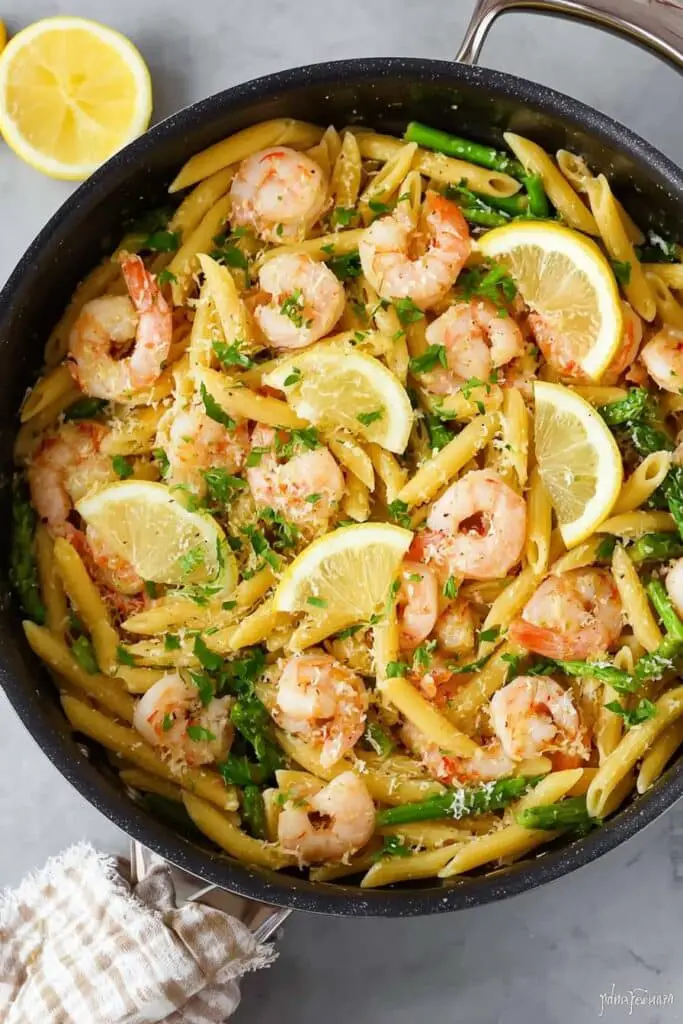
This one pot lemon asparagus pasta with shrimp is satisfying on its own, but it pairs nicely with simple sides. A light green salad with a lemony dressing complements the bright flavors, and some warm garlic bread is perfect for soaking up the extra sauce.
If you want a heartier dinner, serve it alongside grilled chicken or roasted salmon. It also works beautifully for casual family dinners or relaxed weekend meals when you want something fresh but comforting without spending hours in the kitchen.
FAQs
Can I use frozen shrimp?
Yes, just thaw them completely and pat them dry before cooking.
What pasta shape works best?
Short shapes like penne, fusilli, or farfalle hold the sauce well and cook evenly.
Can I make this without wine?
Absolutely. Just use extra broth or water instead.
How do I keep the shrimp from getting rubbery?
Cook them briefly at the start, remove them, and add them back only at the end to warm through.
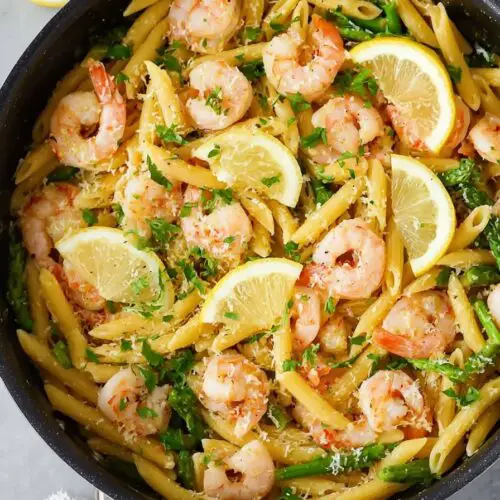
One Pot Lemon Asparagus Pasta With Shrimp
Ingredients
- 12 oz penne or short pasta
- 1 lb medium shrimp peeled and deveined
- 1 bunch asparagus cut into pieces
- 3 cloves garlic minced
- 3 tbsp olive oil
- 1 lemon zest and juice
- ½ cup grated Parmesan cheese
- ¼ cup dry white wine optional
- 3 cups water or broth
- Salt and black pepper to taste
Instructions
- Heat olive oil in a large skillet and cook shrimp until pink. Remove and set aside.
- Sauté garlic in the same pan, then add pasta, broth, and white wine.
- Bring to a boil, then simmer, stirring occasionally.
- Add asparagus halfway through cooking and continue until pasta is tender.
- Return shrimp to the pan. Stir in lemon zest, lemon juice, and Parmesan.
- Season, serve hot, and top with extra cheese if desired.