
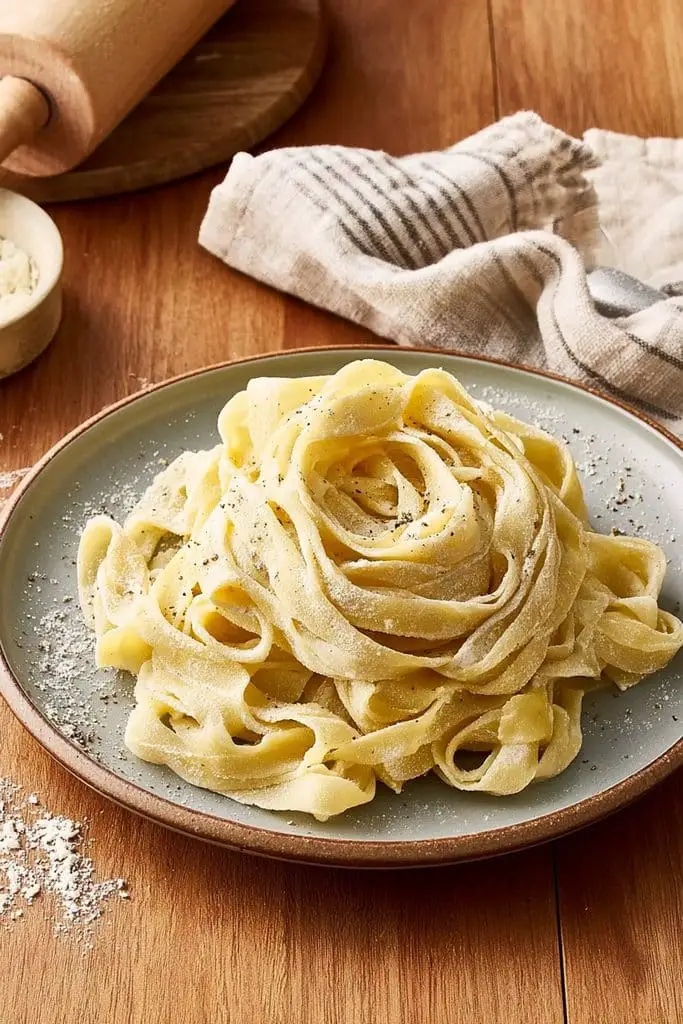
Making eggless pasta dough at home is much easier than it sounds. I love this pasta recipe no egg because it uses a handful of simple ingredients and still gives you wonderfully fresh, chewy pasta with that satisfying homemade texture.
You mix the flour and water, knead it until it becomes smooth, let it rest, and suddenly you’ve got a beautiful little ball of dough ready to turn into noodles, sheets, or ravioli.
This version is especially handy if you don’t eat eggs, want a vegan pasta dough, or simply don’t have eggs in the fridge. I use a combination of flour and semolina because the semolina gives the pasta a lovely bite while regular flour keeps the dough workable and tender.
Ingredient Notes & Substitutions
ALL-PURPOSE FLOUR is the main ingredient here, and you’ll need roughly 1½ cups. Plain white flour works beautifully for homemade pasta because it produces a smooth dough that’s easy to roll. Look for fresh, finely milled flour without any unusual odor or discoloration. If you prefer, you can replace part of it with whole-wheat flour, although the finished pasta will be slightly denser.
SEMOLINA FLOUR is what gives this semolina eggless pasta its pleasantly firm, chewy texture. About ½ cup is enough for this recipe. Choose fine or finely ground semolina if you can find it; coarse semolina can make the dough harder to roll. If you don’t have semolina, simply use additional all-purpose flour, though you’ll lose some of that classic pasta bite.
WATER is the only liquid needed, and you’ll want roughly ½ cup to start with. Lukewarm water is easier to work into the flour than very cold water. Don’t add it all at once, though. Flour absorbs water differently depending on humidity and brand, so you may need a little more or less.
OLIVE OIL is optional, but I like adding about 1 teaspoon. It makes the dough feel a little smoother and easier to handle. A mild-tasting oil works best, but you can leave it out if you want a very basic egg-free dough.
SALT adds a little seasoning to the dough. About ½ teaspoon is plenty. I prefer fine salt because it distributes evenly through the flour.
Step-by-Step Instructions
1. Combine the dry ingredients
Add the all-purpose flour, semolina flour, and salt to a large mixing bowl. Give everything a good stir with your fingers or a fork so the semolina is evenly distributed.
Make a well in the center. This little well makes it easier to gradually incorporate the water without ending up with a sticky mess.
2. Add the water gradually
Pour in about ⅓ cup of lukewarm water along with the olive oil, if using. Start mixing with a fork, pulling flour in from the sides as you go.
Add the remaining water a tablespoon at a time. You’re looking for a dough that feels firm and slightly rough at first, not wet or sticky.
Don’t worry if it looks rather shaggy. That’s completely normal at this stage.
3. Bring the dough together
Once most of the flour has been incorporated, switch from the fork to your hands. Press and squeeze the mixture together until you have one rough ball of dough.
If there are lots of dry crumbs left at the bottom of the bowl, wet your fingertips and knead them into the dough rather than pouring in a large amount of water.
4. Knead until smooth
Transfer the dough to a lightly floured work surface and knead for about 8-10 minutes.
Push the dough away from you with the heel of your hand, fold it back toward yourself, rotate it slightly, and repeat. At first it may feel quite stiff, but keep going.
After several minutes, the dough should become noticeably smoother and more elastic. When you press it gently with your finger, it should spring back slightly.
If the dough is extremely dry and cracking, add a few drops of water and continue kneading. If it feels sticky, dust the surface with a very small amount of flour.
5. Let the dough rest
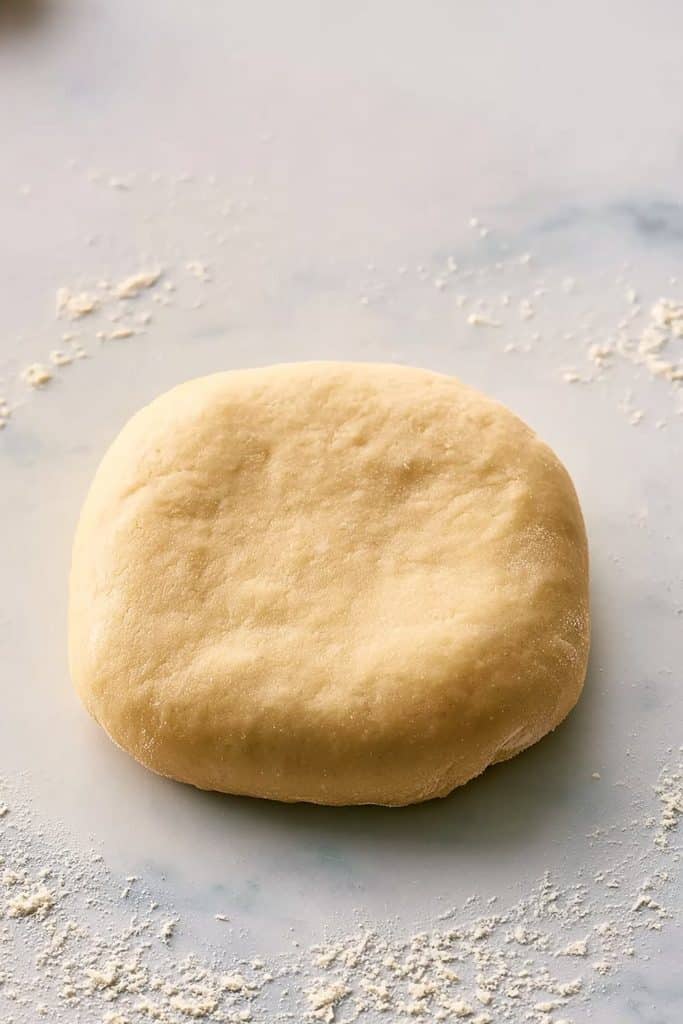
Shape the dough into a smooth ball and wrap it tightly in plastic wrap, or place it in an airtight container.
Let it rest at room temperature for at least 30 minutes.
This step is worth waiting for. The flour needs time to hydrate, and the dough relaxes during the rest, making it much easier to roll out. If you skip the rest, the dough tends to spring back when you try to flatten it.
6. Divide the dough
After resting, unwrap the dough and cut it into 4 roughly equal pieces.
Keep the pieces you aren’t working with covered so they don’t develop a dry skin. Even a clean kitchen towel works for a short period, although an airtight covering is better.
7. Roll the dough
Lightly flour your work surface and flatten one piece of dough with your palm.
Roll it with a rolling pin, turning it frequently so it doesn’t stick. Continue until it’s thin enough for your intended pasta.
If you’re using a pasta machine, start with the widest setting and gradually work your way down through the settings. Don’t rush through this process; rolling the dough gradually gives you much more even sheets.
For tagliatelle or fettuccine, aim for a thin sheet that still has enough structure to hold together when cooked.
8. Cut your pasta
Dust the rolled sheet lightly with flour and fold it loosely over itself, or use your pasta cutter or machine.
Cut into your desired width. You can make thin noodles, wider fettuccine-style strips, or even cut the sheets into squares for homemade ravioli.
Separate the strands gently with your fingers and dust them lightly with flour or semolina to prevent sticking.
9. Cook the fresh pasta
Bring a large pot of well-salted water to a rolling boil.
Drop in the fresh pasta and give it a gentle stir immediately. Fresh egg-free pasta cooks much faster than dried pasta, usually in about 2–4 minutes depending on its thickness.
Start tasting a strand after 2 minutes. It should be tender but still have a pleasant bite.
Drain the pasta, reserving a little pasta water if you’re tossing it with a sauce. That starchy water can help loosen the sauce and make it cling beautifully to the noodles.
Expert Tips
- Use fine semolina if possible; coarse grains make an eggless dough noticeably harder to roll.
- Add water slowly. Humidity and flour type can change how much liquid the dough needs.
- Don’t skip the resting time. A rested dough rolls much more easily and won’t fight back as much.
- Keep unused dough covered while rolling so the surface doesn’t dry out.
- Flour lightly between sheets. Too much flour can make the cooked pasta dusty and prevent sauce from clinging well.
- Cook fresh pasta immediately when possible; it gives you the best texture and needs only a few minutes in boiling water.
- Finish with sauce while the pasta is hot. A splash of reserved pasta water can help create a silky coating.
Storage & Make-Ahead
Fresh pasta dough can be made ahead and kept tightly wrapped in the refrigerator for up to 24 hours. Let it sit at room temperature for about 15–20 minutes before rolling if it feels very firm.
Once you’ve cut the pasta, you can cook it immediately or leave it lightly dusted with semolina for a few hours in the refrigerator. Keep it covered so it doesn’t dry out.
For longer storage, freeze the cut pasta in small portions on a tray first. Once firm, transfer it to an airtight freezer bag or container. There’s no need to thaw it before cooking; simply drop the frozen pasta into boiling salted water and allow an extra minute or two.
I wouldn’t recommend microwaving cooked fresh pasta for long periods because it can turn rubbery and dry. If reheating leftovers, gently warm them in a pan with a splash of water or sauce.
What to Serve With
This homemade pasta is wonderfully versatile. Toss it with a simple tomato and basil sauce for an easy meat-free dinner, or pair it with sautéed mushrooms and garlic when you want something richer without much effort.
For a heartier meal, serve it with grilled chicken, roasted vegetables, or your favorite meatballs. A drizzle of olive oil and a little freshly cracked black pepper can also be enough when you want to keep things simple.
I particularly like this pasta recipe no egg for busy weeknight dinners because the dough can be prepared ahead. It also makes a fun weekend family project when everyone wants to help roll and cut the pasta.
FAQs
Can I make eggless pasta dough without semolina?
Yes. Replace the semolina with an equal amount of all-purpose flour. The pasta will still work, although it may have a softer texture and less of the characteristic semolina bite.
Can I make this pasta dough vegan?
Yes. The basic dough is vegan as long as you use plant-based ingredients and omit any egg-based sauce or filling. The dough itself contains no eggs.
How do I know when eggless pasta is cooked?
Fresh pasta usually cooks in just a few minutes. Start tasting it after about 2 minutes. It should be tender but still slightly firm in the center.
Why is my pasta dough too dry?
The most common reason is simply that the flour has absorbed more water than expected. Add water gradually just a few drops or a teaspoon at a time and knead until the dough becomes smooth and cohesive.
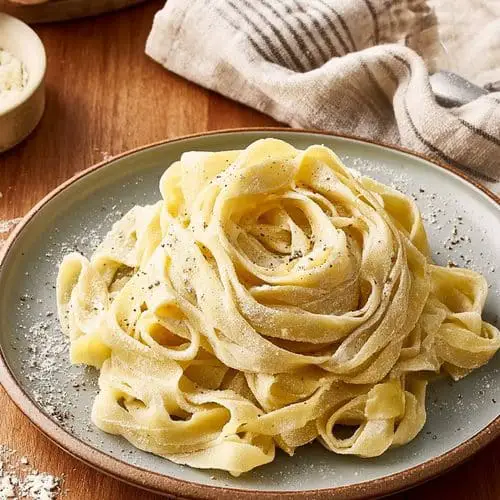
Eggless Pasta Dough
Ingredients
- 1½ cups 190 g all-purpose flour
- ½ cup 80 g fine semolina flour
- ½ teaspoon salt
- ½ cup 120 ml lukewarm water, plus more as needed
- 1 teaspoon olive oil optional
Instructions
- Mix the all-purpose flour, semolina, and salt in a large bowl. Make a well in the center.
- Add the olive oil and most of the lukewarm water. Mix gradually, adding more water only as needed to form a firm dough.
- Knead on a lightly floured surface for 8–10 minutes, until smooth and elastic.
- Wrap the dough and let it rest for at least 30 minutes at room temperature.
- Divide into 4 pieces, roll each piece thinly, and cut into your preferred pasta shape. Dust lightly with semolina to prevent sticking.
- Cook in plenty of salted boiling water for about 2–4 minutes, depending on thickness. Drain and toss immediately with your favorite sauce.