
If you love the savory filling inside a crispy egg roll but don’t feel like dealing with wrappers and frying, these Egg Roll Bowls are just what you need. They’re packed with tender ground chicken, crunchy cabbage, carrots, garlic, and a delicious ginger-soy sauce that brings everything together in one skillet.
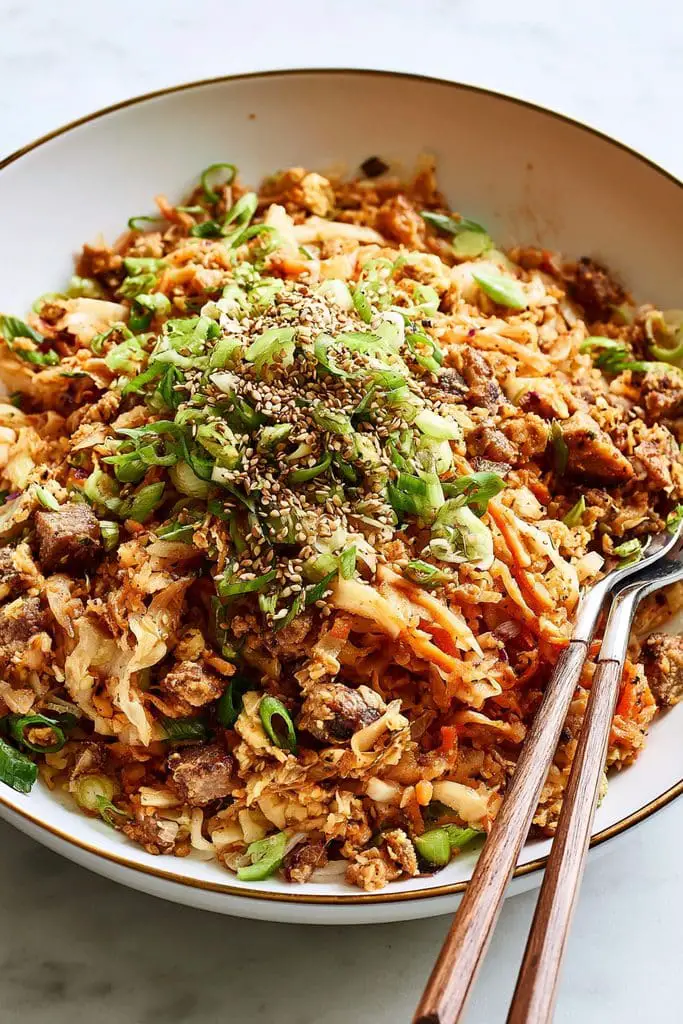
This egg roll bowls recipe has all the familiar flavors of your favorite takeout appetizer, but it’s simpler to make at home and easy to customize. You can have dinner on the table in about 30 minutes, making it a great choice for busy weeknights when you want something satisfying without a lot of fuss.
What I especially love about this dish is how flexible it is. Serve it as it is for a lighter meal, spoon it over steamed rice when you’re extra hungry, or add a little chili sauce if you enjoy some heat. These healthy egg roll bowls are just as handy for meal prep as they are for a quick family dinner.
Ingredient Notes & Substitutions
GROUND CHICKEN: You’ll need about 1 pound (450 g) of ground chicken for a bowl that’s hearty without feeling too heavy. Choose fresh chicken with a light pink color and no unpleasant odor. Ground turkey works just as well, and lean ground pork is another option if you’d like a richer, more traditional egg roll flavor.
GREEN CABBAGE: One small head of green cabbage, or roughly 6 cups shredded, gives the bowls their signature crunch. Look for a firm, compact head with crisp leaves and no dark, soft patches. You can use a bag of coleslaw mix instead if you want to save chopping time. Napa cabbage is another lovely choice, although it softens a little faster.
CARROTS: Two medium carrots add natural sweetness, color, and a little extra crunch. Choose firm carrots with a bright orange color. Peel and grate them yourself for the freshest texture, or use pre-shredded carrots when you’re short on time.
YELLOW ONION: One small onion adds a sweet, savory base to the filling. Pick one that feels firm and has dry, papery skin. A white onion works perfectly well, and a few sliced green onions can be added near the end for a fresher finish.
GARLIC: Three cloves of fresh garlic give the chicken and vegetables that unmistakable savory aroma. Choose firm cloves without green sprouts or soft spots. If fresh garlic isn’t available, about 1 teaspoon of garlic paste will work, though fresh garlic gives the best flavor.
FRESH GINGER: About 1 tablespoon of freshly grated ginger adds warmth and a gentle zing that balances the salty sauce. Look for a firm piece with smooth skin. Ginger paste is a convenient substitute, and you can use a little less if you prefer a milder flavor.
LOW-SODIUM SOY SAUCE: Around 3 tablespoons provide the salty, umami-rich flavor that makes these bowls taste like egg roll filling. Low-sodium soy sauce gives you more control over the seasoning. Tamari is a good alternative, while coconut aminos offer a slightly sweeter, less salty option.
RICE VINEGAR: One tablespoon brightens the sauce and keeps the dish from tasting too rich or salty. Choose unseasoned rice vinegar so you can control the sweetness yourself. Apple cider vinegar can work in a pinch, but use a little less initially and adjust to taste.
SESAME OIL: One teaspoon adds a nutty aroma that makes the finished dish feel like your favorite takeout. Toasted sesame oil is particularly flavorful, so a small amount goes a long way. If you don’t have it, use a neutral cooking oil for the chicken and finish with toasted sesame seeds instead.
NEUTRAL COOKING OIL: One tablespoon of avocado, canola, or vegetable oil is enough to sauté the onion and chicken without overpowering the other ingredients. Choose an oil suitable for medium-high heat.
GREEN ONIONS AND SESAME SEEDS: Two or three sliced green onions and a teaspoon or two of sesame seeds make a simple, attractive garnish. Choose green onions with crisp green tops and firm white ends. Both toppings are optional, but they add freshness and a little extra texture.
BLACK PEPPER AND RED PEPPER FLAKES: A little black pepper brings everything into balance, while red pepper flakes add optional heat. Start with a pinch and add more at the end if you like a spicier bowl.
Step-by-Step Instructions
1. Prepare the vegetables and sauce
Start by washing the cabbage, carrots, and green onions. Remove any damaged outer cabbage leaves, cut the cabbage into quarters, remove the tough core, and slice it into thin strips. Grate the carrots, finely dice the onion, and mince the garlic and ginger.
In a small bowl, stir together the soy sauce, rice vinegar, and sesame oil. Keep the mixture close to the stove so you can add it as soon as the chicken and vegetables are ready.
Having everything prepared before you start cooking makes this quick recipe much easier. The cabbage cooks quickly, so you don’t want to be chopping carrots while it softens in the skillet.
2. Sauté the onion, garlic, and ginger
Place a large skillet or wok over medium-high heat and add the neutral cooking oil. Once the oil is warm, add the diced onion and cook for about 2-3 minutes, stirring occasionally.
The onion should begin to soften and turn slightly translucent. Add the garlic and ginger, then stir for another 30-45 seconds, just until fragrant. Keep them moving around the pan so the garlic doesn’t burn and turn bitter.
3. Cook the ground chicken
Add the ground chicken to the skillet. Use a wooden spoon or spatula to break it into small pieces as it cooks.
Let the chicken cook for about 6-8 minutes, stirring and breaking up larger pieces until it’s no longer pink. If a lot of liquid collects in the pan, continue cooking until most of it evaporates. You want the chicken to look lightly browned in places rather than boiled in its own juices.
For food safety, ground chicken should reach an internal temperature of 165°F (74°C). A food thermometer is the most reliable way to check.
4. Add the cabbage and carrots
Stir in the shredded cabbage and grated carrots. At first, the skillet may look very full, but don’t worry. Cabbage loses a lot of its volume as it cooks.
Cook for about 4-6 minutes, tossing frequently so the vegetables mix evenly with the chicken. The cabbage should soften slightly while retaining a little bite, and the carrots should become tender without turning mushy.
If you prefer softer vegetables, cook them for another 2-3 minutes. For a more traditional egg roll texture, keep the cooking time shorter.
5. Pour in the sauce
Give the soy sauce mixture another quick stir and pour it over the chicken and vegetables. Toss everything thoroughly so the sauce coats the filling rather than pooling at the bottom.
Let the mixture cook for another 1-2 minutes. You’ll notice the garlic, ginger, and sesame aromas becoming more pronounced as the sauce warms and clings to the cabbage.
Taste a small spoonful. Add black pepper, a pinch of red pepper flakes, or a splash of rice vinegar if needed. If the dish tastes too salty, a little extra shredded cabbage or a small squeeze of lime can help balance it.
6. Finish and serve
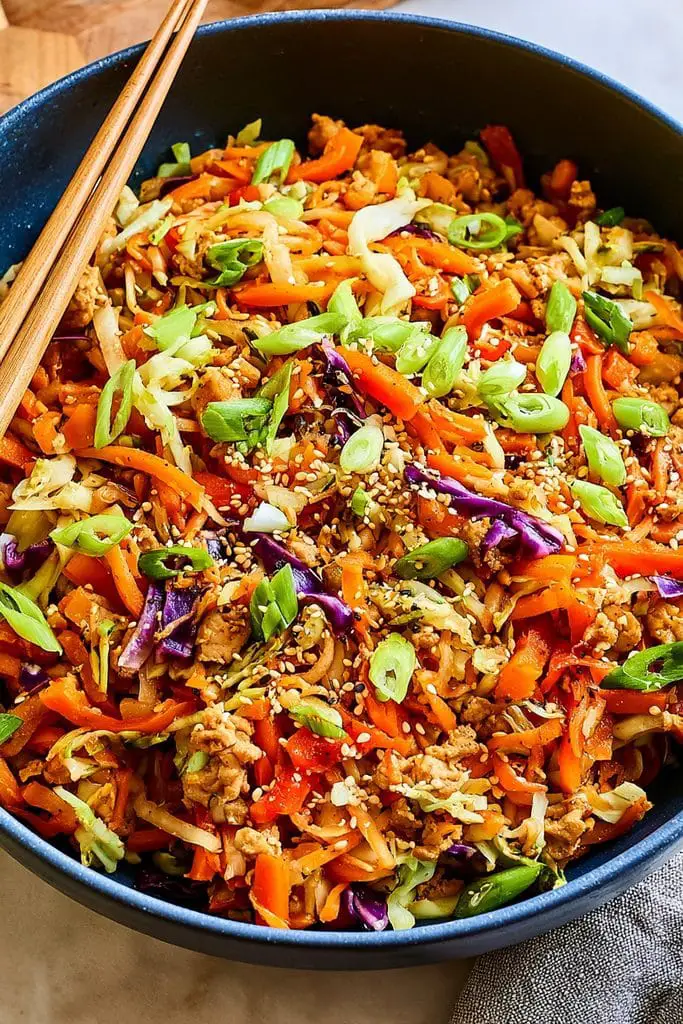
Turn off the heat and sprinkle sliced green onions and sesame seeds over the top. Give everything one final toss, or leave the garnishes on top for a nicer presentation.
Serve your egg roll bowls warm, straight from the skillet. They’re delicious on their own, but steamed rice, brown rice, or cauliflower rice makes an easy addition if you’d like a more filling meal.
Expert Tips
- Choose a firm cabbage: A small, dense head with crisp leaves gives you better crunch and less waste than one with soft or damaged leaves.
- Use a wide skillet: A large pan gives the chicken room to brown and helps prevent the cabbage from steaming in a crowded pile.
- Don’t overcook the vegetables: Start checking the cabbage after 4 minutes. It should be tender but still have a little bite.
- Grate fresh ginger: Freshly grated ginger gives the sauce a brighter flavor than dried ginger powder.
- Taste before adding salt: Soy sauce already contains plenty of sodium, so adjust the seasoning only after the sauce has been mixed in.
- Make it your own: Add sliced mushrooms, bell peppers, or edamame for variety, or sprinkle red pepper flakes on top for extra heat.
- Finish with something fresh: Green onions, sesame seeds, or a small squeeze of lime brighten the rich, savory filling just before serving.
Storage & Make-Ahead
Let leftover egg roll bowls cool slightly, then transfer them to a clean, airtight food-storage container. Refrigerate within 2 hours of cooking and enjoy within 3-4 days. Keep rice in a separate container if you’re preparing complete meal-prep portions.
For longer storage, freeze the cooked chicken and cabbage mixture in freezer-safe containers for up to 2-3 months for best quality. The cabbage will soften more after freezing and thawing, so the texture won’t be quite as crisp as when freshly cooked.
To reheat, warm a portion in a skillet over medium heat for a few minutes, stirring occasionally. Add a teaspoon of water if the filling looks dry. You can also microwave it in a covered, microwave-safe dish in short intervals, stirring between each one, until it’s steaming hot throughout. Avoid heating it for too long in one go, as the cabbage can become limp and the chicken may dry out.
These bowls are excellent for meal prep. You can shred the cabbage and carrots, dice the onion, and mix the sauce a day ahead. Store the prepared ingredients separately in the refrigerator, then cook everything fresh when you’re ready to eat. For the best texture, keep garnishes separate until serving.
What to Serve With Egg Roll Bowls
For a simple weeknight dinner, serve these bowls over steamed jasmine rice or brown rice. The rice soaks up the savory sauce and makes the meal more substantial without requiring much extra preparation. Cauliflower rice is another option if you prefer a vegetable-based side.
If you’re serving a family dinner or putting together a casual Asian-inspired spread, pair the bowls with baked teriyaki salmon, grilled chicken skewers, or crispy tofu. The additional protein gives everyone more variety, while the fresh cabbage keeps the meal balanced.
You can also serve the filling alongside steamed dumplings, cucumber salad, or a light vegetable soup. For busy evenings, though, I think these egg roll bowls are satisfying enough on their own. They’re also a useful option for weekly meal prep because the ingredients are affordable, easy to find, and simple to portion into individual containers.
Frequently Asked Questions
1. Can I make egg roll bowls without chicken?
Absolutely! Ground turkey, lean ground pork, or crumbled firm tofu are all good substitutes. For a vegetarian version, use tofu or plant-based ground meat and check that your soy sauce and other seasonings fit your dietary needs.
2. Can I make egg roll bowls in an air fryer?
The complete recipe is easiest to cook in a skillet because you can brown the chicken and toss the cabbage with the sauce. An air fryer can be used to cook the chicken separately, but you’ll still need to combine it with the vegetables and sauce. Make sure the chicken reaches 165°F (74°C).
3. How do I keep the cabbage from getting soggy?
Use a wide skillet, avoid adding water unnecessarily, and cook the cabbage only until it reaches your preferred texture. If the pan is crowded, cook the vegetables in batches or add the cabbage in two portions.
4. Are egg roll bowls good for meal prep?
Yes! Store them in airtight containers in the refrigerator for 3-4 days. Reheat individual portions until steaming hot, and keep rice and fresh garnishes separate for the best results.
Egg Roll Bowls
Ingredients
- 1 tablespoon neutral cooking oil
- 1 pound 450 g ground chicken
- 1 small yellow onion diced
- 3 garlic cloves minced
- 1 tablespoon freshly grated ginger
- 6 cups shredded green cabbage about 1 small head
- 2 medium carrots grated
- 3 tablespoons low-sodium soy sauce
- 1 tablespoon rice vinegar
- 1 teaspoon toasted sesame oil
- ¼ teaspoon black pepper or to taste
- ¼ teaspoon red pepper flakes optional
- 2 green onions sliced
- 1-2 teaspoons sesame seeds optional
Instructions
- Prepare the sauce: Mix the soy sauce, rice vinegar, and sesame oil in a small bowl. Chop the vegetables and set everything aside.
- Sauté the aromatics: Heat the neutral oil in a large skillet over medium-high heat. Add the onion and cook for 2-3 minutes, then stir in the garlic and ginger for 30-45 seconds.
- Cook the chicken: Add the ground chicken, breaking it into small pieces. Cook for 6-8 minutes, until browned and cooked through to an internal temperature of 165°F (74°C).
- Cook the vegetables: Add the cabbage and carrots. Stir-fry for 4-6 minutes, until the cabbage is slightly softened but still has some crunch.
- Add the sauce: Pour in the prepared sauce and toss well. Cook for another 1-2 minutes, then taste and adjust the seasoning.
- Garnish and serve: Sprinkle with sliced green onions and sesame seeds. Serve warm on its own or with steamed rice.